






Tires occupy an unusual place in vehicle ownership. Drivers rely on them every day, trust them with every turn, stop, and lane change, and then spend remarkably little time thinking about them. In fairness, they are not particularly attention-seeking components. They simply get on with the job until something goes wrong. Understanding a few tire basics can help prevent surprises, extend tire life, and make future service recommendations a lot easier to understand.
What Do All Those Numbers on a Tire Mean?
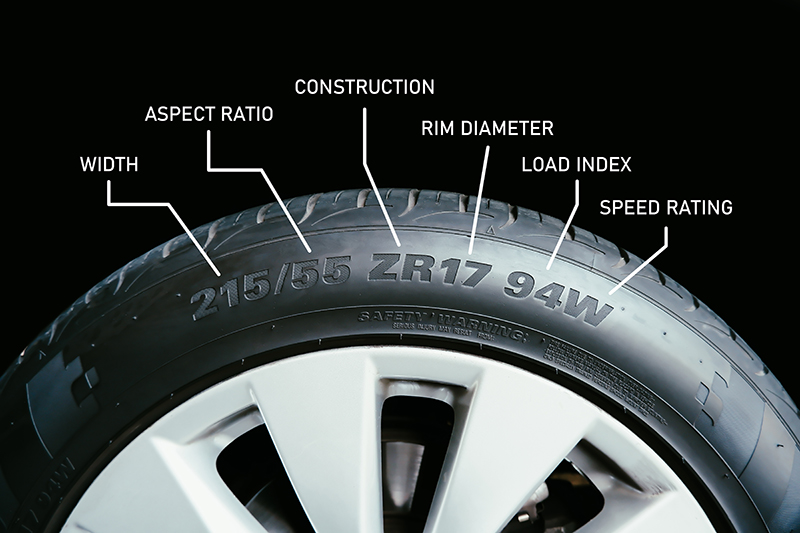
If you’ve ever looked at a tire sidewall and encountered something like P215/65R16, you’ve seen what appears to be a secret code developed by people who enjoy making simple things complicated.
Fortunately, it’s actually quite logical. The “P” indicates a passenger vehicle tire. The three-digit number that follows represents the tire’s width in millimeters. The number after the slash refers to the aspect ratio, which compares the tire’s sidewall height to its width. The “R” signifies radial construction, and the final number indicates the wheel diameter in inches.
It may not be thrilling information, but it becomes very useful when it’s time to replace your tires. The correct tire size can always be found in your owner’s manual or on the information sticker located inside the driver’s door opening.
Why Tire Rotations Matter
Tires rarely wear evenly. Front tires often carry additional responsibilities, particularly on front-wheel-drive vehicles, where they handle both steering and power delivery. Rear tires typically live a less demanding existence.
A tire rotation helps balance those wear patterns by moving the tires to different positions on the vehicle at regular intervals. Most manufacturers recommend rotations every 5,000 to 7,500 miles, though the exact schedule varies by vehicle.
One practical approach is to rotate the tires during routine oil changes. It is easier to remember when two maintenance tasks happen together, which is helpful because remembering maintenance schedules is not generally humanity’s strongest skill.
How Do You Know When It’s Time for New Tires?
Tires wear gradually, which makes replacement decisions easy to postpone. The classic penny test remains one of the simplest ways to check tread depth. Insert a penny into the tread groove with Lincoln’s head facing downward. If the top of his head remains visible, the tread has worn to the point where replacement should be considered.
Age matters as well. Even if a tire appears to have adequate tread, rubber naturally degrades over time. Many manufacturers recommend replacing tires after approximately six years, regardless of mileage. A tire can look healthy while approaching retirement still.
Warning Signs Worth Paying Attention To
Most tires provide clues before a failure occurs. Bulges in the sidewall often indicate internal damage and should be addressed immediately. Cracks in the rubber may suggest age-related deterioration or prolonged exposure to harsh environmental conditions.
Uneven tread wear can point to alignment or suspension concerns. Persistent vibration at highway speeds may indicate tire damage, imbalance, or other mechanical issues. Meanwhile, a tire that repeatedly loses air is generally trying to tell you something. Ignoring it rarely improves the situation.
What Should You Do If You Get a Flat Tire?
First, avoid panic. If a tire fails while you’re driving, maintain a firm grip on the steering wheel and ease off the accelerator gradually. Abrupt braking can make the situation more difficult to control. Allow the vehicle to slow naturally before moving to a safe location away from traffic. Activate your hazard lights and assess the situation.
If you have the proper equipment and feel comfortable changing the tire, a spare can help get you back on the road. If not, roadside assistance remains a perfectly sensible option. Many modern vehicles also include connected services that can help drivers quickly arrange assistance when needed.
A Little Attention Goes a Long Way
Tires may not receive much attention during everyday driving, but they influence nearly every aspect of vehicle performance, from ride quality and fuel efficiency to braking and handling.
Drivers throughout Southaven, MS can rely on experienced service technicians at Jimmy Gray Chevrolet for tire inspections, rotations, balancing, alignments, and replacements. If you have questions about tire wear or simply want peace of mind before your next road trip, a professional inspection is always time well spent.
Connect with us


